Scaling a Business Feels Like a Dumpster Fire — Here’s How AI Fixes It
Scaling a Business Feels Like a Dumpster Fire, Here’s How AI Fixes It
Ever Tried Scaling Your Business with the Grace of a Hippo on Ice?
Welcome to the world of business scaling, AI marketing, and automation — where the only ice involved is in the margaritas we’re not drinking because we’re too busy fixing the printer.
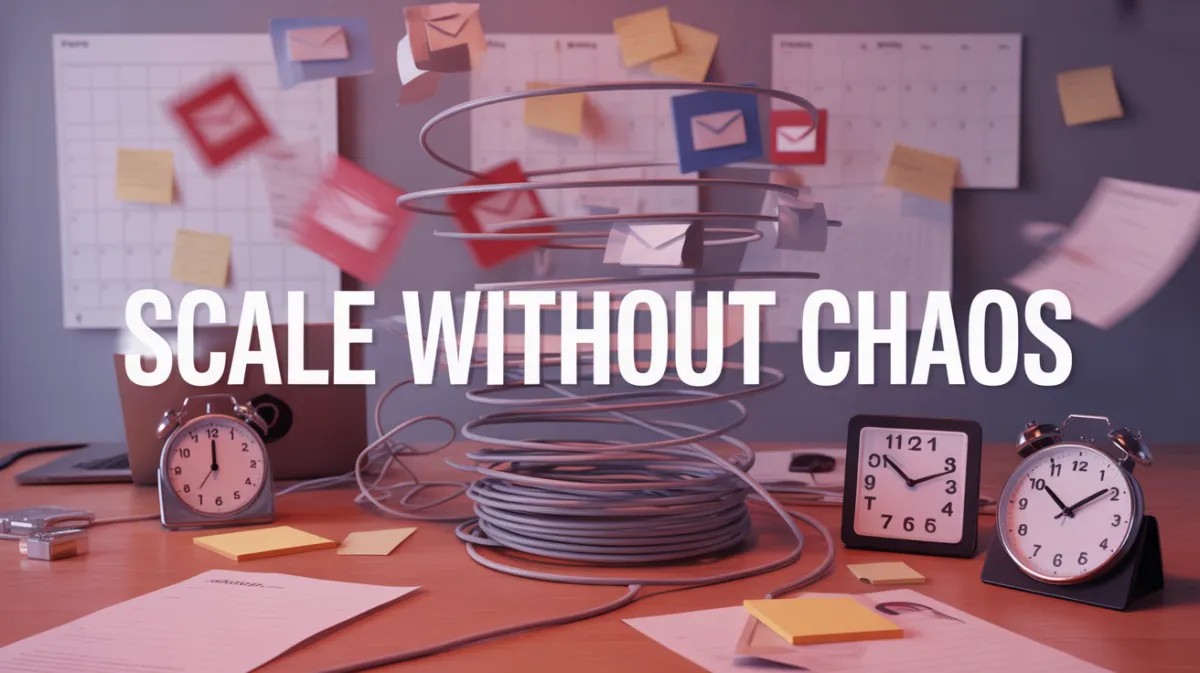
If scaling your business feels chaotic, exhausting, and way harder than it should be, you’re not broken.
Your systems are.
Let’s get into it.
Introduction: Why Your Business Feels Like a Beyoncé Concert Backstage
Scaling a business without losing your mind is like trying to quietly unwrap a candy in a symphony hall — technically possible, realistically unhinged.
If you constantly feel overwhelmed, stretched thin, or stuck in the weeds, it usually comes down to three things:
Inefficient scaling systems
An unclear AI marketing strategy
Little to no real automation
Most businesses don’t fail because they lack effort.
They fail because everything still depends on them.
Before you spiral at the thought of “AI” and “automation,” let’s slow this down and make it practical — with humor, clarity, and strategies you can actually implement.
(Related: AI Automation for Small Businesses 2026 Guide)
The Art of Scaling: More Fun Than a Barrel of Monkeys?
Understanding the Beast
Business scaling is like trying to stuff a mattress into a Prius.
It’s not elegant.
It requires strategy, structure, and patience.
The goal isn’t just growth — it’s manageable, profitable growth.
Growth that doesn’t wreck your operations, customer experience, or sanity.
This is where founders get stuck — pushing harder instead of building smarter systems.
Tools of the Trade
Think of technology as your Swiss Army knife — useful, versatile, and essential when used correctly.
Cloud-based CRMs.
Automated customer support platforms.
Workflow automation tools.
Used well, these tools don’t just reduce workload — they lower stress and eliminate bottlenecks.
The problem?
Most businesses stack tools without connecting them.
(Related: Intelligent Agents vs Tools: What’s the Difference?)
Real-World Examples: The Good, the Bad, and the Ugly
McDonald’s self-service kiosks?
That’s smart scaling — standardized, automated, efficient.
A small business that expands too quickly without systems?
Chaos. Like Thanksgiving dinner without the turkey.
Scaling works when infrastructure comes first.
AI Marketing: Not a Robot Invasion
AI and Consumer Behavior
AI isn’t here to replace creativity — it’s here to eliminate guesswork.
It analyzes behavior, personalizes messaging, and prevents mistakes like sending a discount email to someone who just purchased at full price.
AI helps you market with context, timing, and relevance.
(See also: Intent-Data Outreach Explained: The New Sales Engine)
Automation Tools That Don’t Break the Bank
Yes, platforms like HubSpot or Marketo require investment.
But so does inefficiency.
Think of automation like buying a winter coat in the Arctic — optional only if you enjoy suffering.
The right tools pay for themselves by saving time, reducing errors, and improving consistency.
Case Studies: AI Wins
Netflix is the gold standard here.
Their recommendation engine doesn’t just suggest content — it predicts behavior and increases engagement automatically.
That’s AI doing what humans shouldn’t have to.
The Symphony of Automation
Workflow Automation: The What and the Why
Workflow automation is like having a personal assistant who never sleeps and never forgets.
It:
Moves data between systems
Triggers follow-ups
Handles repetitive tasks
Keeps processes consistent
Why do manually what software can execute perfectly?
Breaking Down Automation Myths
No — automation won’t replace you.
It replaces task fatigue.
Automation makes you the decision-maker instead of the bottleneck.
Success Stories: Automation for the Win
Amazon didn’t scale by hiring endlessly.
They scaled by automating logistics, warehousing, and fulfillment.
That’s how infrastructure beats effort.
Integrating AI and Automation into Scaling
Best Practices
AI and automation aren’t about duct-taping tools together.
They work best when integrated intentionally — like peanut butter and jelly.
This is where intelligent agents come in.
Agents don’t just assist — they execute workflows end-to-end.
(Explore: The Intelligent Agent Framework — How Small Businesses Automate Real Work)
Common Pitfalls to Avoid
Over-automation is real.
If you’ve ever seen someone use a chainsaw to cut a tomato — you get it.
Automate what’s repeatable.
Keep humans where judgment and nuance matter.
How to Start Small
Start with one workflow:
Email responses
Lead follow-up
Customer data management
Scheduling and reminders
Automate it. Measure it. Improve it.
Baby steps scale better.
Conclusion: Bringing It All Together Without Losing It
Scaling with AI and automation is like riding a rollercoaster you actually control.
It’s still intense — but now it’s intentional.
Scale smart.
Market smarter.
Automate the smartest.
And laugh along the way — because chaos gets easier when systems handle the heavy lifting.
Ready to Transform Your Business?
Don’t freeze like a deer in headlights.
Start small.
Automate intentionally.
Scale at your pace.
If you want help identifying what to automate first — or building a real execution system — start with an audit or explore COREI, our intelligent sales and outreach engine built for modern businesses.
(Next read: Automated Sales Engines vs Agencies: What Founders Need to Know)